Workshops

How a workshop runs.

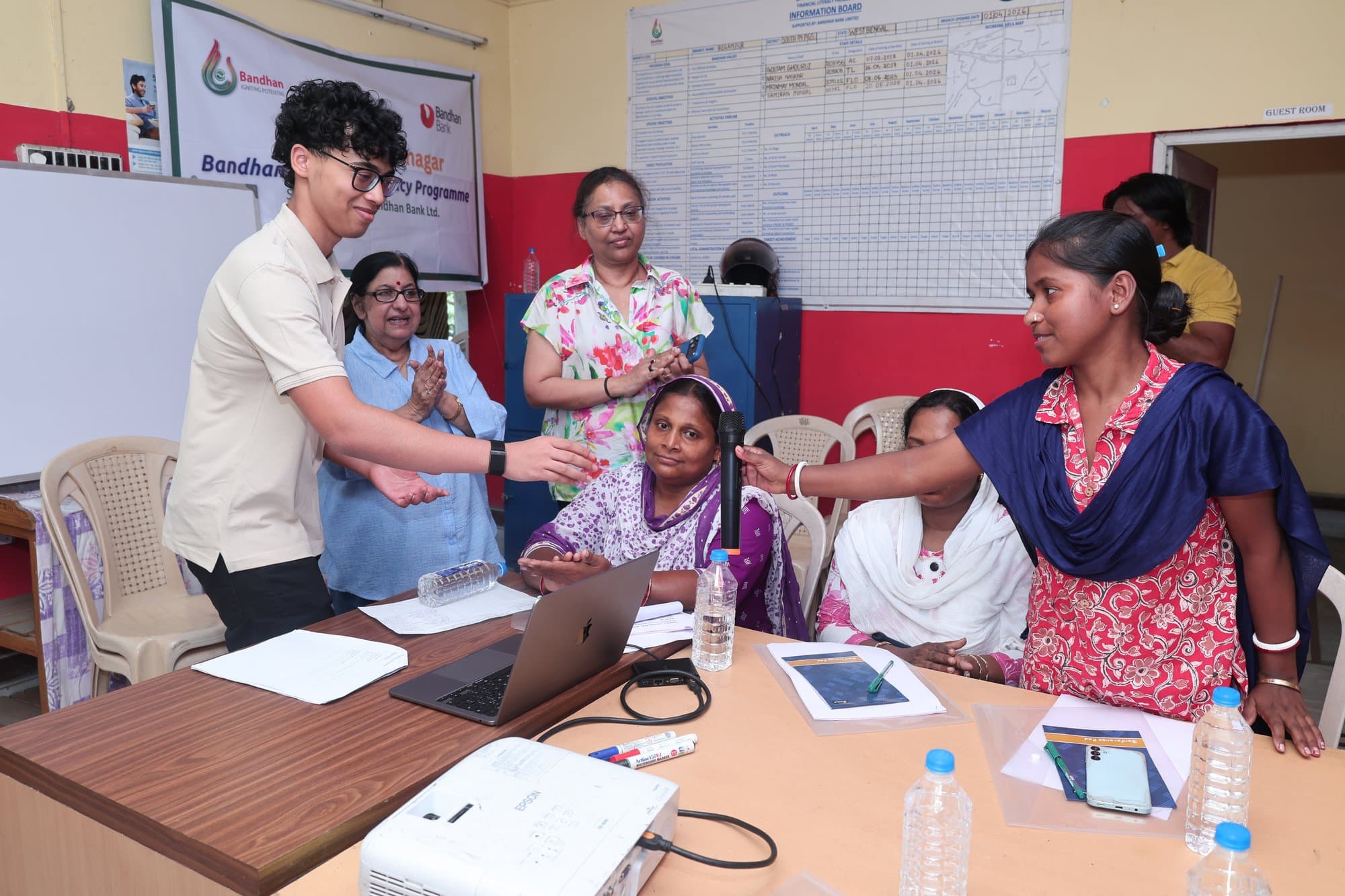
All ten modules in a room the community already trusts, then follow-up for as long as it takes — so far in Baruipur, near Kolkata, in Bengali with Hindi alongside it.

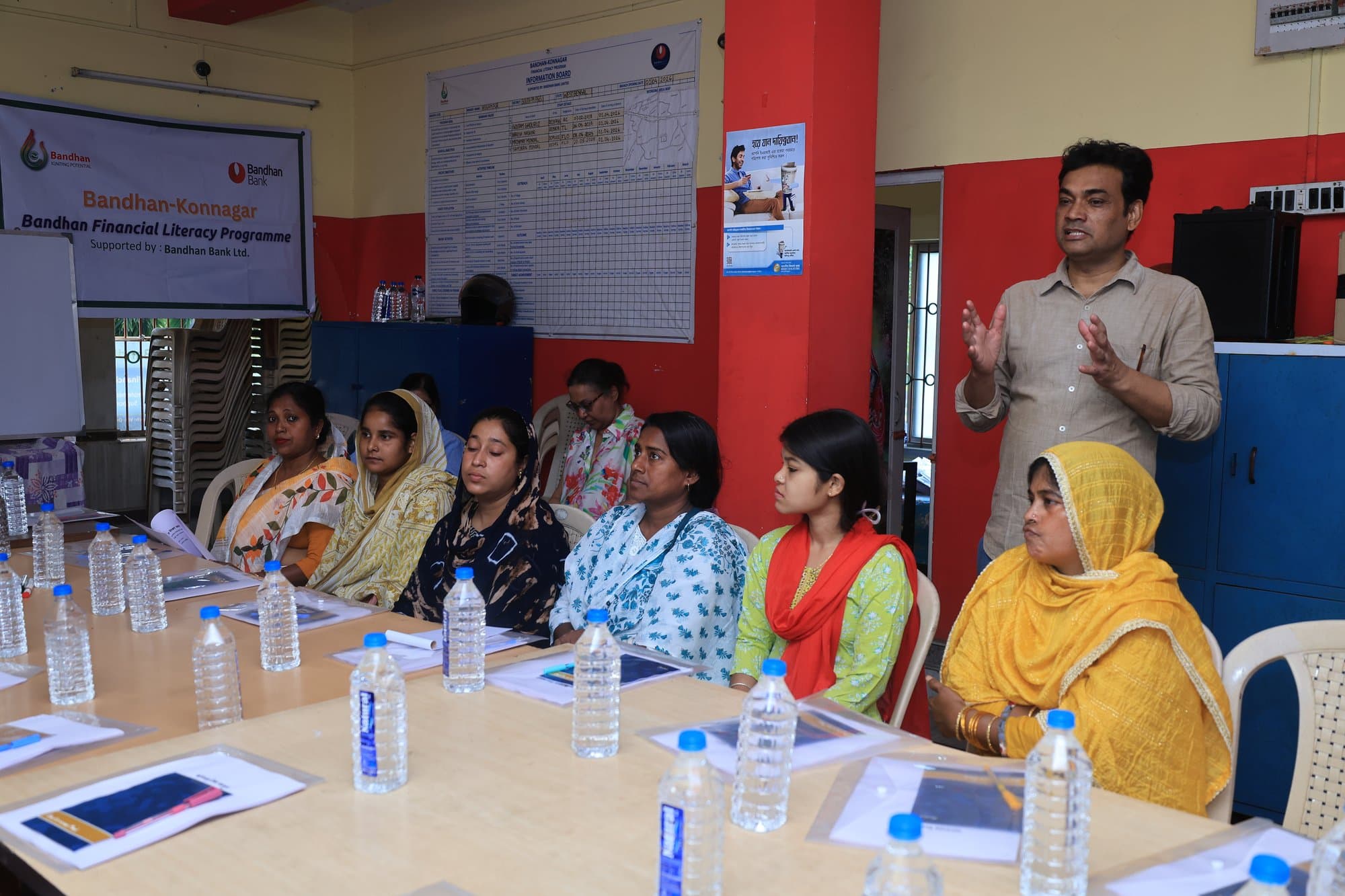
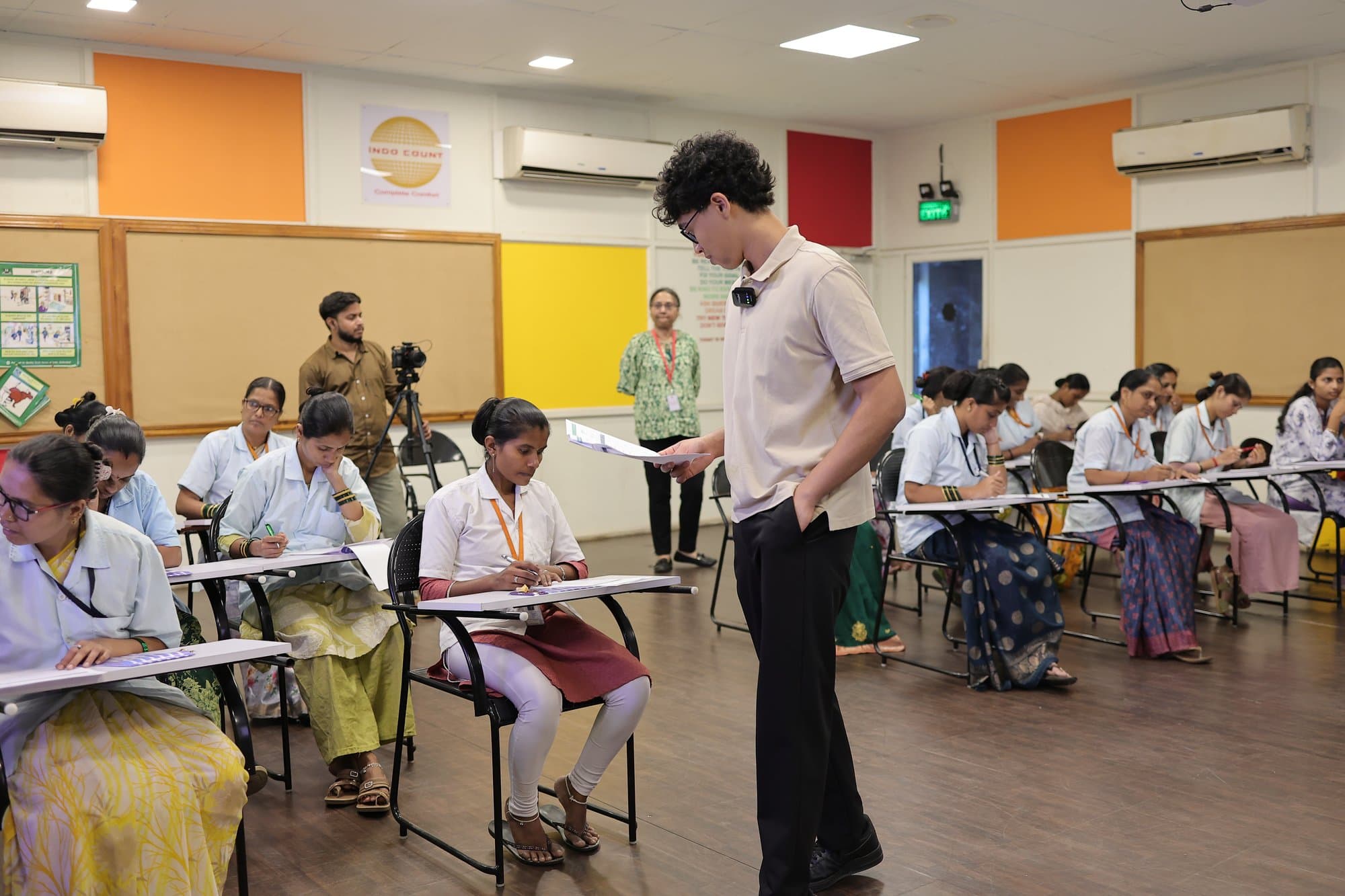
A wide view of a workshop in session, the cohort seated around the tables

Baruipur · [ YEAR ] · [ PHOTOGRAPHER ]

§ 01  ·  The format

Ten modules. Fifty-plus women. Follow-up that continues after.

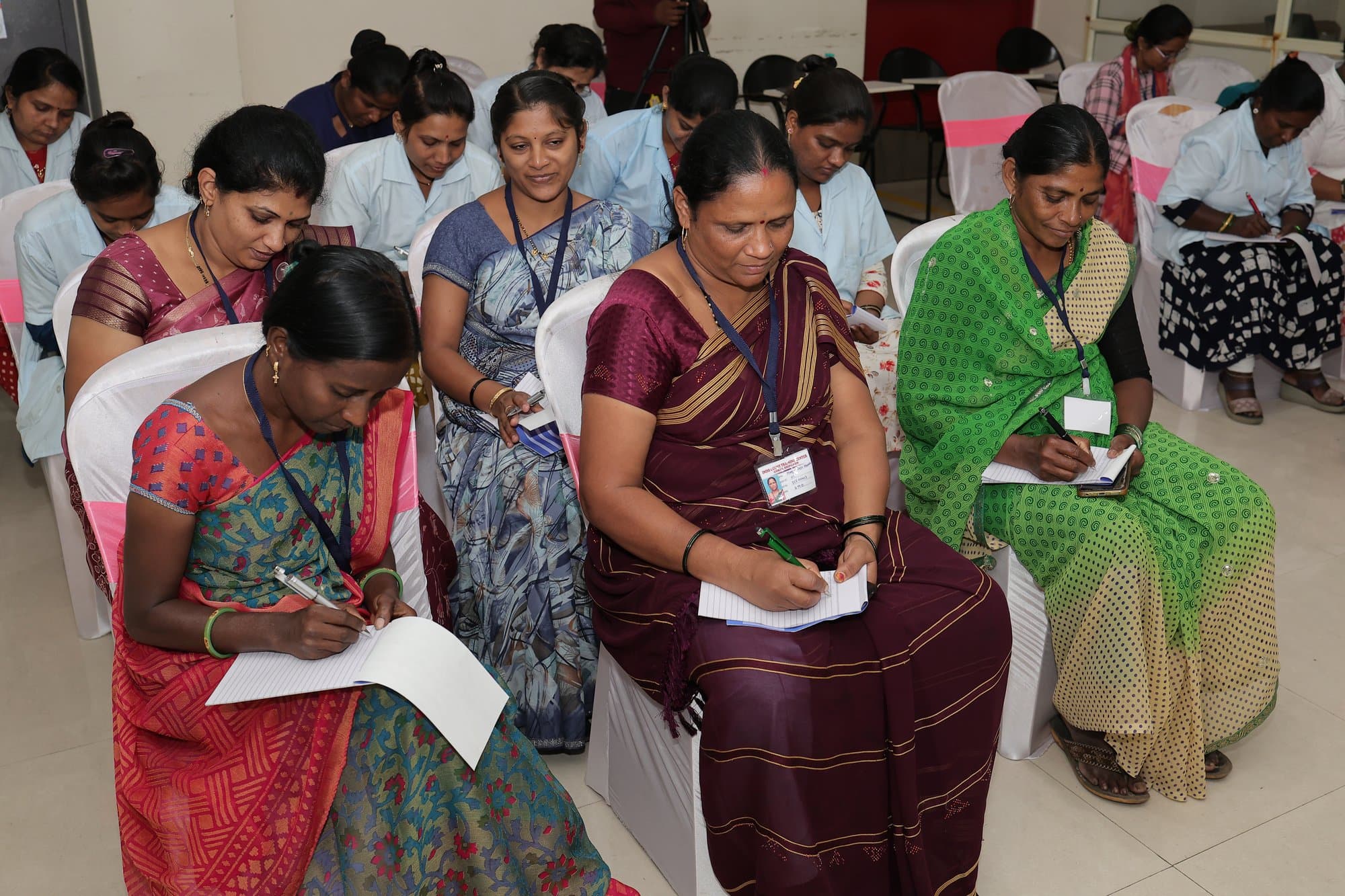
A workshop gathers fifty or more women in a space the community already trusts — a Self-Help Group hall, a livelihood room, a partner's premises. Together the cohort works through the ten modules of Knowing Your Money. The first sessions introduce the whole curriculum; what comes after is shaped around the room.

Bengali is the working language, with Hindi alongside it; most facilitators move between the two in a sentence. Each student gets the Knowing Your Money textbook in her own script and a notebook to track her own household.

The work doesn't end when the modules do. Follow-up sessions — several of them over video call — return to whatever a cohort still needs, from opening an account in her own name to setting up UPI, with each woman's progress tracked along the way. Some students go on to facilitate the next cohort themselves.

§ 02  ·  The three pillars

Control · Protect · Grow. Every module belongs to one.

The ten modules are organised under three pillars. Control, then protect, then grow — in that order, because you cannot protect or grow what you do not yet command.

IPillar

Control.

Modules that put a student in command of her own money — her name on the account, her notebook on the table, her wages negotiated up to what they are worth.

IIPillar

Protect.

Modules that defend against loss — scams that target the careful saver, debt taken without understanding, and the emergency that arrives unannounced.

IIIPillar

Grow.

Modules that build wealth over time — the compounding habit, the safe place to keep what is saved, the first real investment, and the digital rails that carry it all.

§ 03  ·  The CRP Model

How the work travels — and stays.

The CRP Model.

Community Resource Person — student first, facilitator second.

The CRP Model — Community Resource Person — is the spine of how this work travels. A student completes the ten modules, then — if she wants to teach the next cohort — trains to facilitate it herself: deeper work on every module, and practice in front of a room in Bengali and Hindi before she leads one of her own.

She then returns to her own community, sometimes her own neighbourhood, and runs the workshop in a room that already knows her. A curriculum carried by an outside expert is one people listen to politely; carried by a neighbour, it's one they argue with, push back on, take home.

Several of the women who first sat in a cohort have gone on to teach others. The work stays in the community after the founder leaves the room.

[ N% ]
of the women now facilitating workshops first completed the curriculum as students themselves.
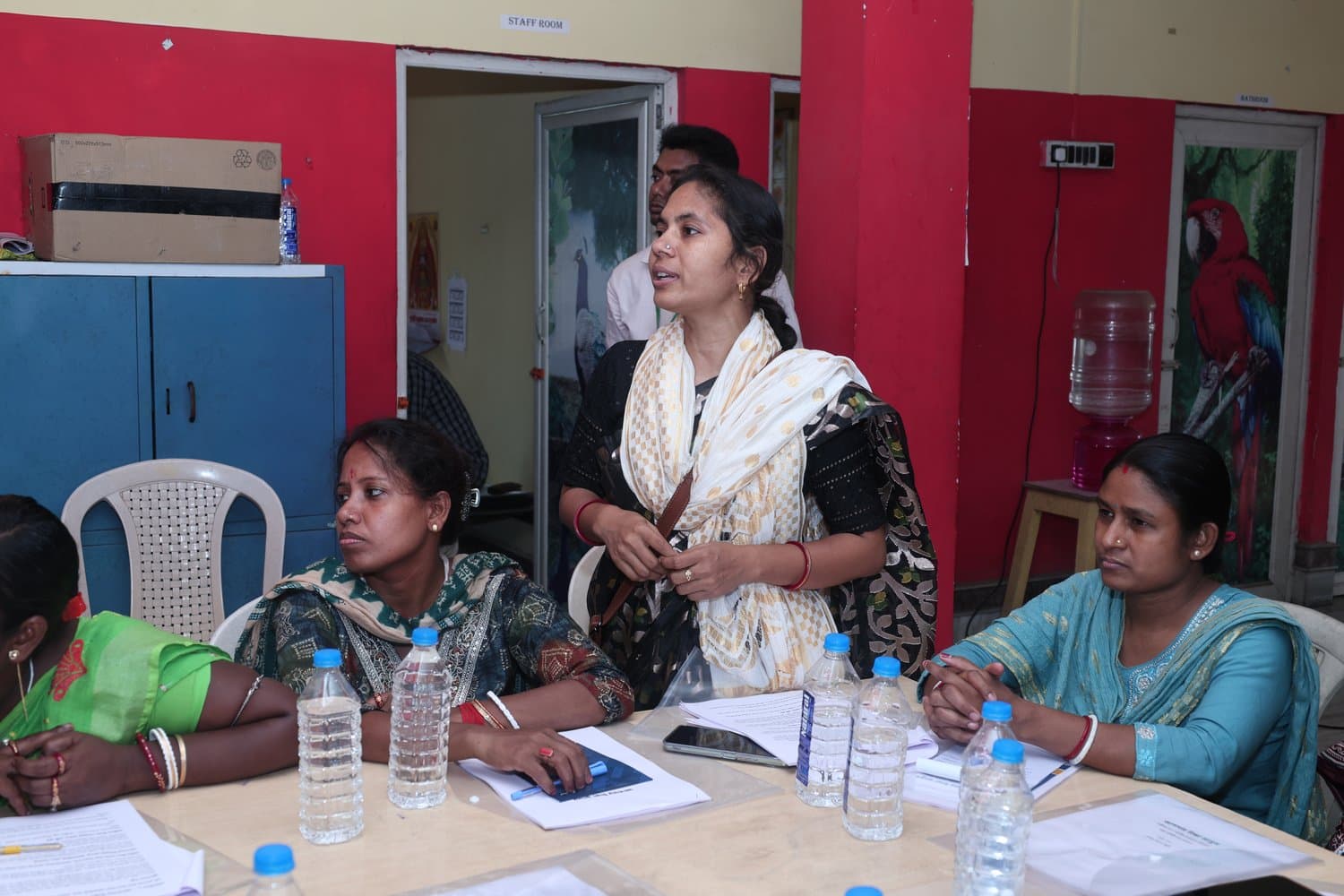
A Community Resource Person speaking during a session
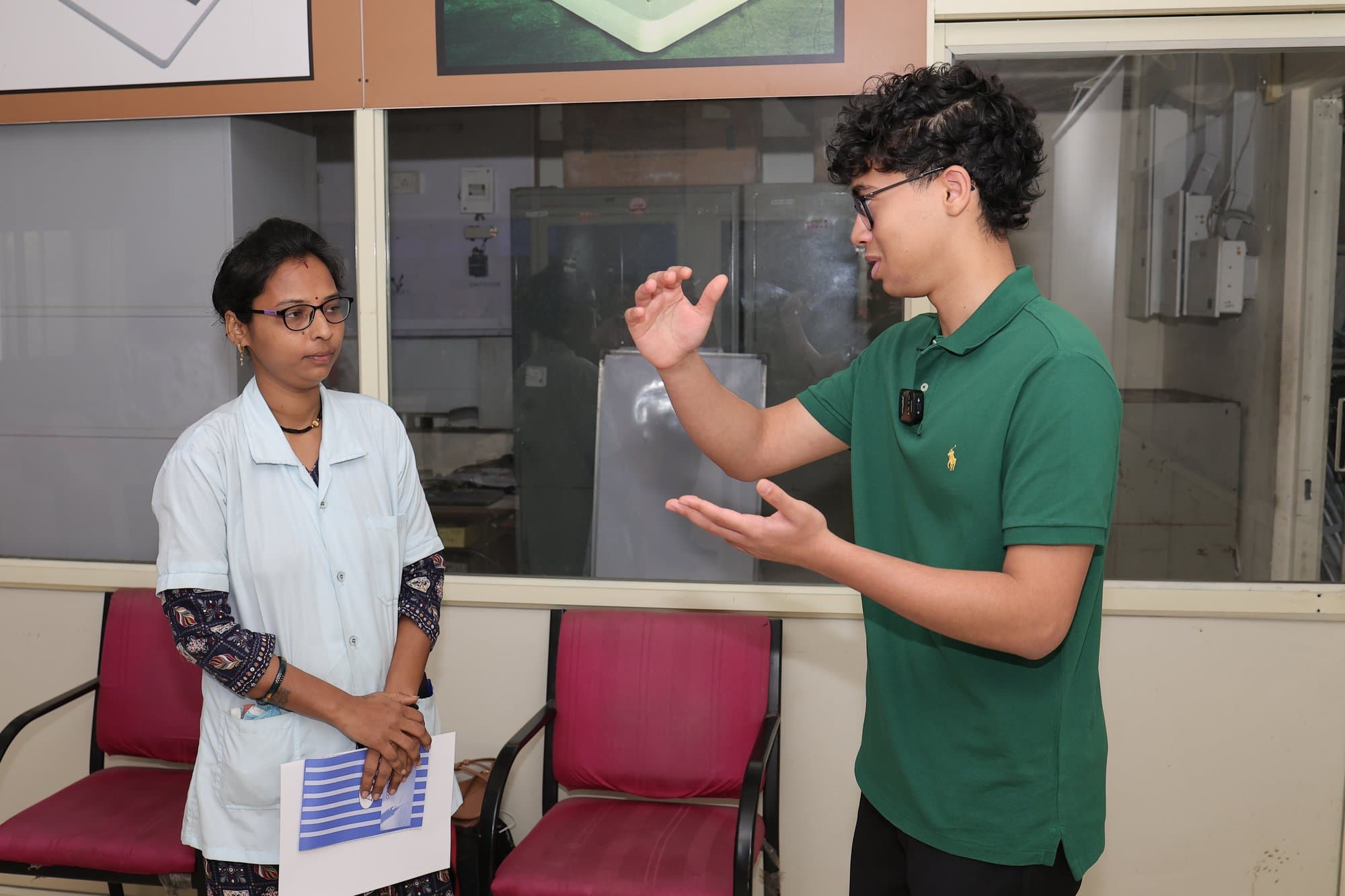
A Community Resource Person leads part of a session.
A facilitator working through the curriculum with the cohort
Working through the curriculum with the cohort that will teach next.
A facilitator-in-training taking part in a session
A facilitator-in-training takes part in the room.

§ 04  ·  In the room

The founder facilitating. Photos and clips.

In the room.

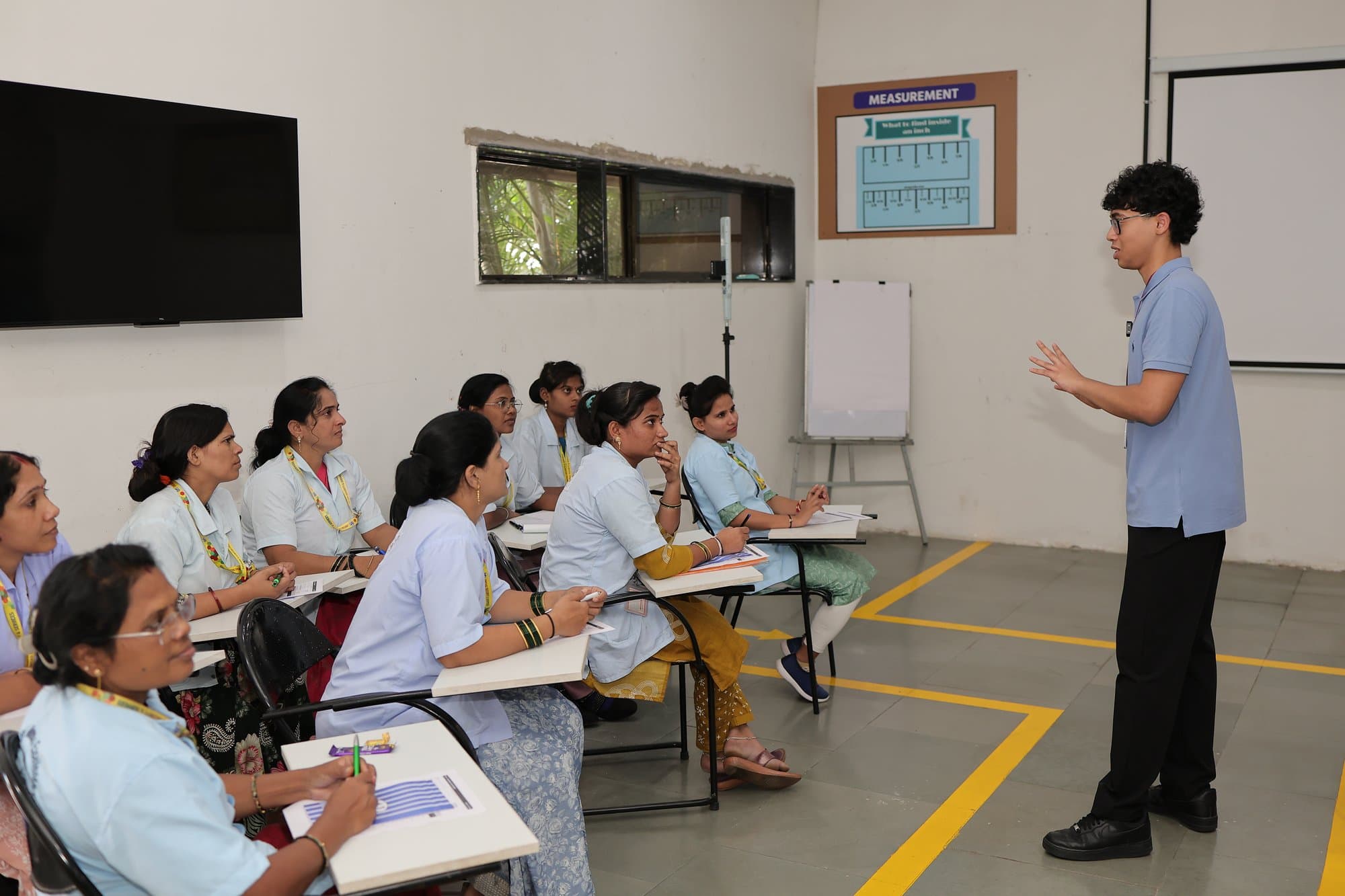
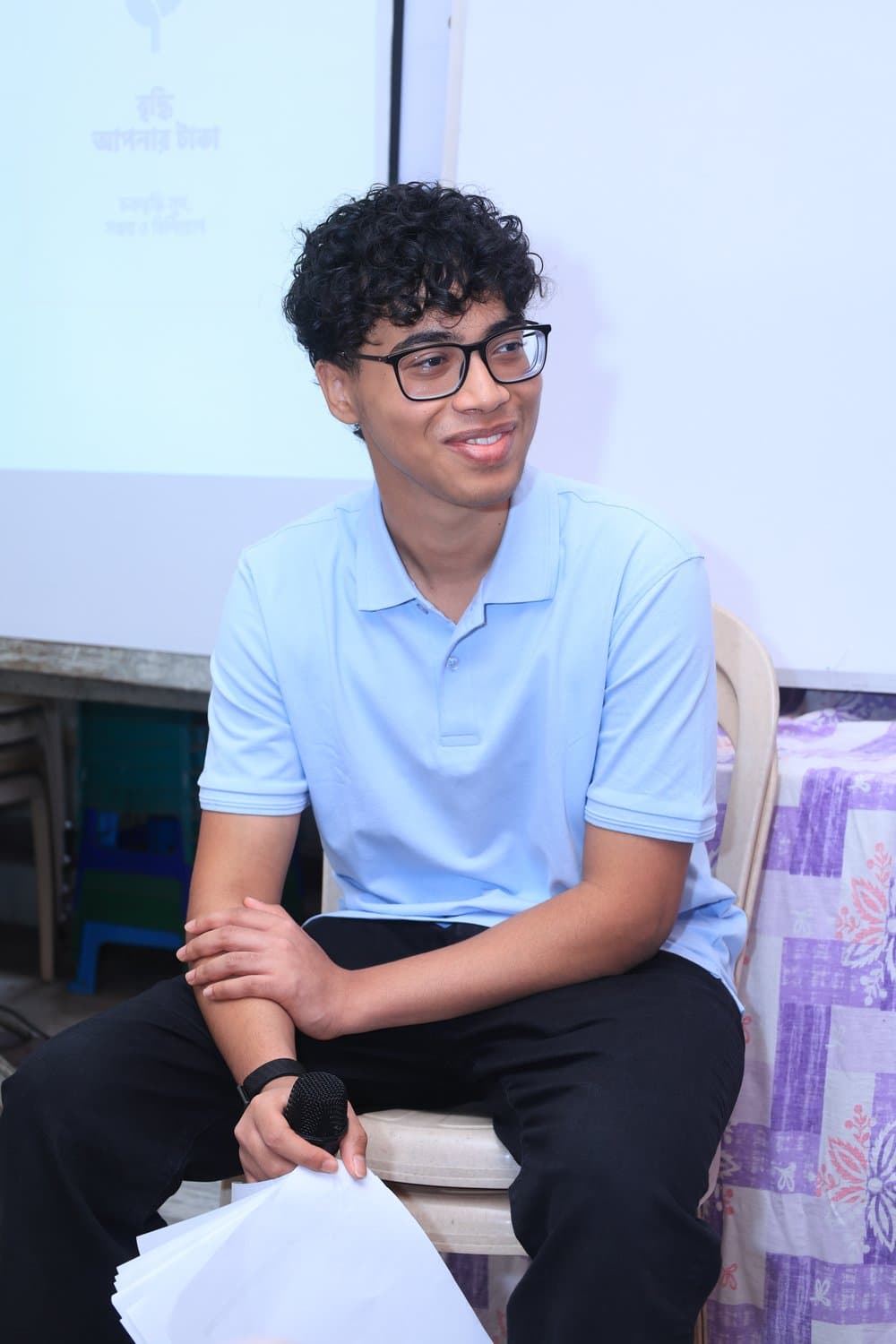
The founder facilitating a session
The cohort gathered during a session
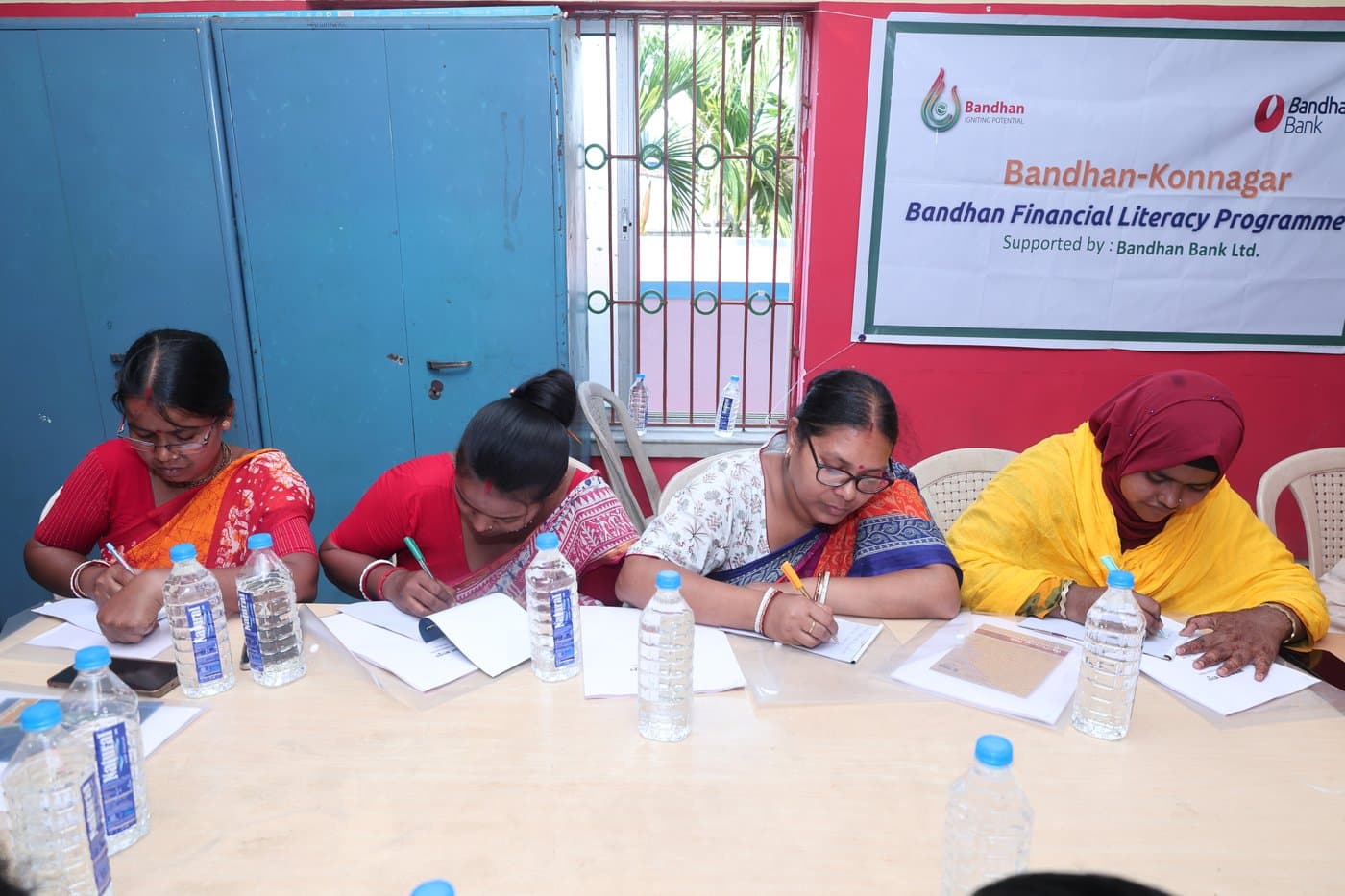
Participants working through the worksheet
Participants between sessions
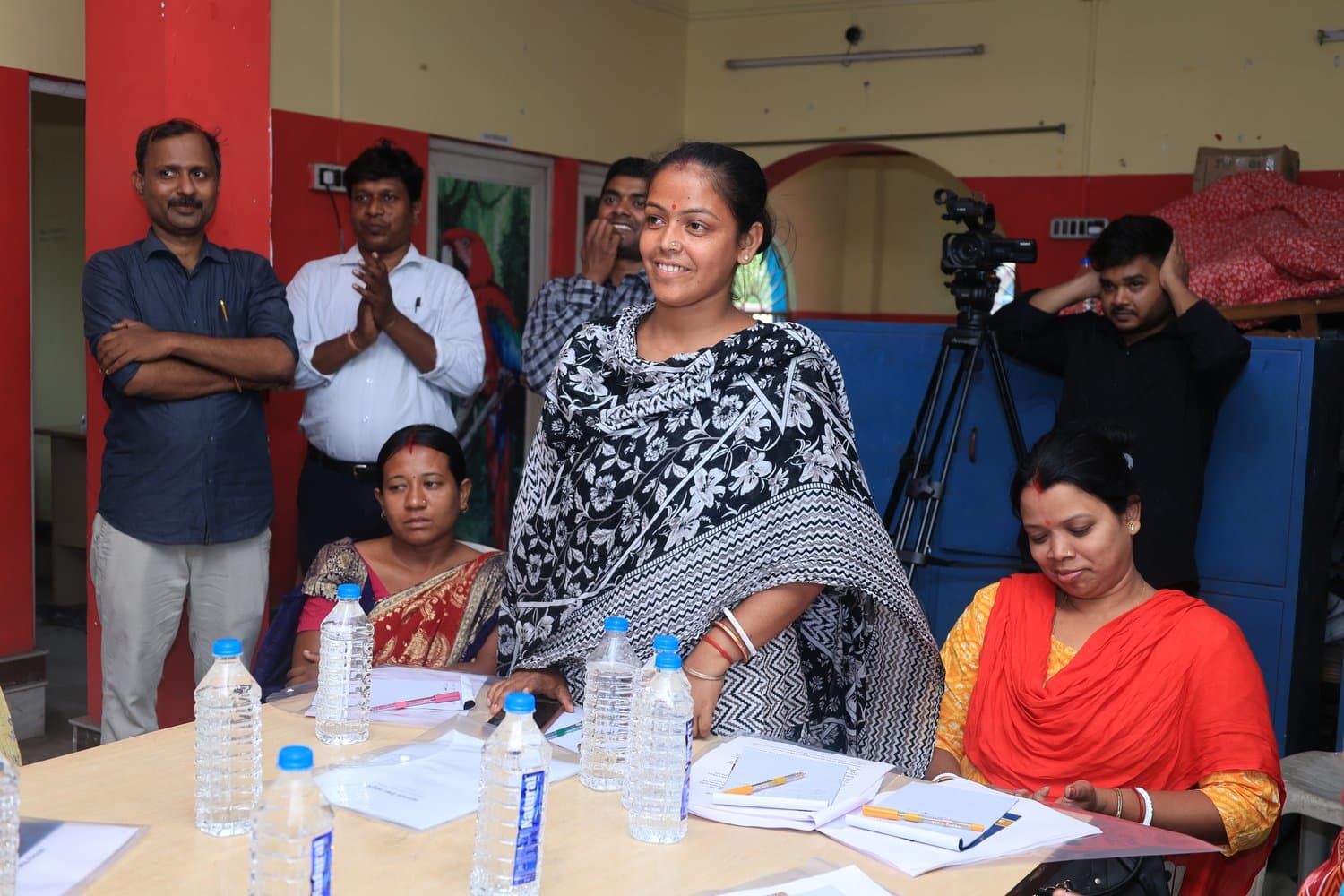
Passing the microphone during the session
Notes and worksheets on the table
[ VIDEO · ROOM ][ clip · [ TIME ] · Bengali · Module 03 ]
[ VIDEO · ROOM ][ clip · [ TIME ] · Bengali · Module 06 ]

What stays with me is how good it felt to be useful. We taught through activities, not lectures — counting out a month's spending in paper notes, arguing over which jar a rupee belonged in. Some women were shy at first; a few barely spoke for the first hour. By the end they were the ones correcting their neighbours, and the room ran itself. The modules give the work its bones; the women in the room give it its voice. The lesson, I learned, was never really the slides — it was the moment a woman realised she already knew more than she thought.

— Rehaan Chowdhary, founder

§ 05  ·  What changed between cohorts

What each workshop taught the curriculum.

The curriculum is fixed in its spine and porous at its surface.

Two workshops have run so far, both in Baruipur. Between them the curriculum changed in small ways — what landed, what needed more time, which examples a room recognised and which fell flat.

The pattern that holds: the budgeting work bites harder when it's run against a woman's lowest-earning month, not her average. So that is how it is now taught.

What's still being worked out is mostly sequence and length — the order of the digital-money and scam-shield modules, how much time the emergency-fund worksheet really needs. The curriculum is fixed in its spine and porous at its surface. We re-edit between workshops, not during them.

§ 06  ·  Partnership

The institutional spine that makes the workshops possible.

In partnership with Bandhan.

None of this happens without Bandhan-Konnagar. The NGO brings the halls, the relationships on the ground, and the trust that lets a workshop open its doors with a cohort already in the room. Bandhan Bank Ltd supports the work behind it.

The Prosperity Project brings the curriculum, the facilitator training, the textbook, and the design that holds it all together. The partnership is in its second year, with the current cohort still in follow-up; where it extends next is being worked out now.